
A significant El Niño weather pattern is forecast this year, bringing hotter, drier and windier conditions to much of New Zealand. Drier conditions can be challenging for growth, but we have some ways to help you prepare, and weather the months ahead.
Choose the right species
Tough hardy primary colonising species able to tolerate and thrive in full sun and dry conditions are the best start to a restoration project. Wait until there is enough shade and shelter for the secondary species to be planted (titoki for example). Planting these too soon will likely be a waste of money.
Start with a good planting hole
Weirdly, the hole is just as important, if not more, than the plant. In dry sites make a bowl-shaped depression about a metre wide, so that all the water falling within this space will run into the hole where the plant is. A grubber is a useful tool for making this shape.
Professional planters are now using augers to dig holes, and if you have a big project, they are well worth hiring or investing in. The hole should be deeper than the plant and about twice the width of the plant rootball too. Dig a little deeper than where the plant will sit, and break up the soil, leaving it in the hole. Whatever tool is used to dig the hole, make sure the hole edges are broken up and not smeared smooth (otherwise the hole turns into a bucket).
Retain moisture with water crystals
Water crystals are a very good back-up plan in dry years or on quite dry sites. The trick with them is not to put too many in, because too many crystals can blow the plant out of the hole, which rather defeats the purpose.
Water in well from the outset
Before putting the plant in the hole, ensure it is well soaked and its rootball is as wet as possible. Maybe have a big bucket or fishbin filled with water to soak the plants well for several minutes before planting.
Use planting mats or mulch
After planting, a layer of mulch or a weedmat will help to retain moisture on a dry site. We recommend – and can supply – a wool mat of 600gsm which is 45cm x 45 cm in size. Use weedmat pins to secure the mats or use the spade to dig the corners of the mat securely into the ground.
Hot weather can create difficulties for plants if guards are used to protect plants. In warmer conditions it’s good to have air movement around the plants, so we now recommend using the animal repellent Plantskydd instead of a guard. And putting in a tall bamboo stake helps to identify exactly where the plants are, making it easier to find them later.
Setting up plants for success in dry years takes a bit more time and effort, but it’s worth giving the plants the best shot at establishing.
About Marie Taylor
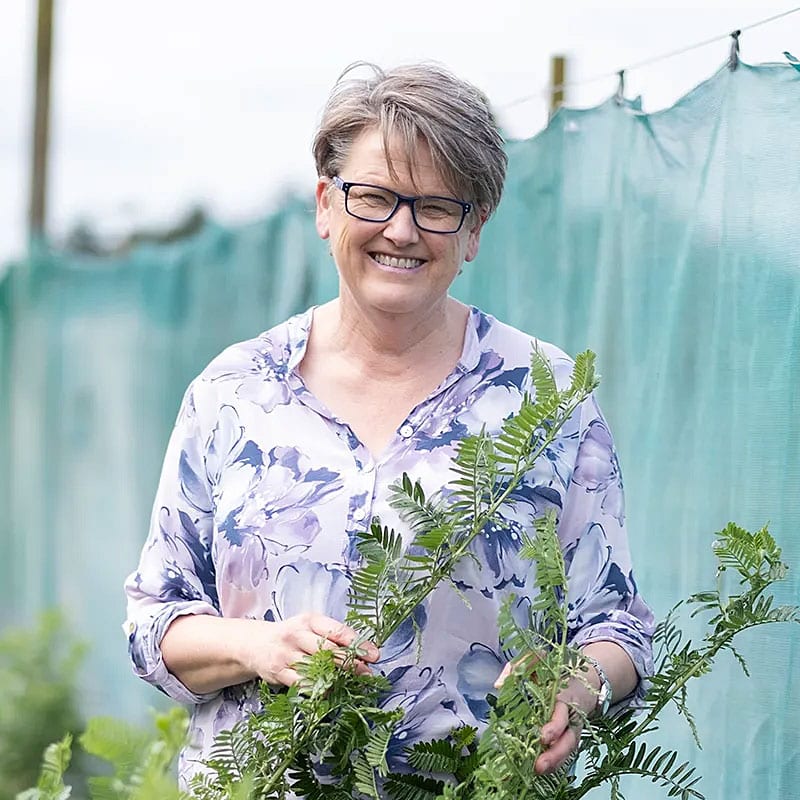
Marie Taylor is the founder of Plant Hawke’s Bay. With a background in horticultural science and rural journalism, she has been recognised for her contributions to landscape revegetation and habitat protection, including receiving a Queen’s Service Medal and winning the Supreme Award at the 2018 NZI Rural Women NZ Business Awards.